

Osteoarthritis in Dogs and Cats: Recognizing the Signs and Helping Your Pet Live Comfortably
Osteoarthritis in Dogs and Cats: Recognizing the Signs and Helping Your Pet Live Comfortably
Osteoarthritis (OA) is the most common joint disease in dogs, affecting roughly 20% to 25% of the general canine population. However, the percentage increases significantly with age and breed, with up to 80% of dogs over 8 years old showing clinical or radiographic signs of OA.
Osteoarthritis (OA), also known as degenerative joint disease, is one of the most common chronic conditions affecting dogs and cats. While many pet owners assume that slowing down is simply a normal part of aging, stiffness, reduced mobility, and reluctance to play are often signs of joint pain rather than "just getting older".
The good news is that osteoarthritis can be managed successfully. With early recognition, appropriate treatment, and lifestyle adjustments, pets with arthritis can continue to enjoy happy, active lives for many years.
What is Osteoarthritis?
Osteoarthritis is a progressive disease in which the protective cartilage covering the ends of bones gradually wears away. As cartilage deteriorates, bones begin to rub against each other, causing inflammation, pain, stiffness, and decreased joint function
Although OA cannot be cured, its progression can often be slowed, and pain can be effectively controlled
Commonly affected joints include:
- Hips
- Knees (stifles)
- Elbows
- Shoulders
- Spine
- Hocks (ankles)
Both dogs and cats can develop osteoarthritis, although the signs may differ considerably between species
Causes and Risk Factors
Several factors contribute to the development of osteoarthritis:
- Obesity
- Previous joint injuries
- Hip or elbow dysplasia
- Cruciate ligament injuries
- Genetics
- Developmental orthopedic diseases
- Repetitive athletic activity
- Joint infections or immune-mediated diseases
Large breed dogs such as Labrador Retrievers, German Shepherds, Golden Retrievers, and Rottweilers are particularly susceptible. Cats, especially those over 10 years of age, frequently develop arthritis, although it often goes unnoticed.
Signs of Osteoarthritis in Dogs
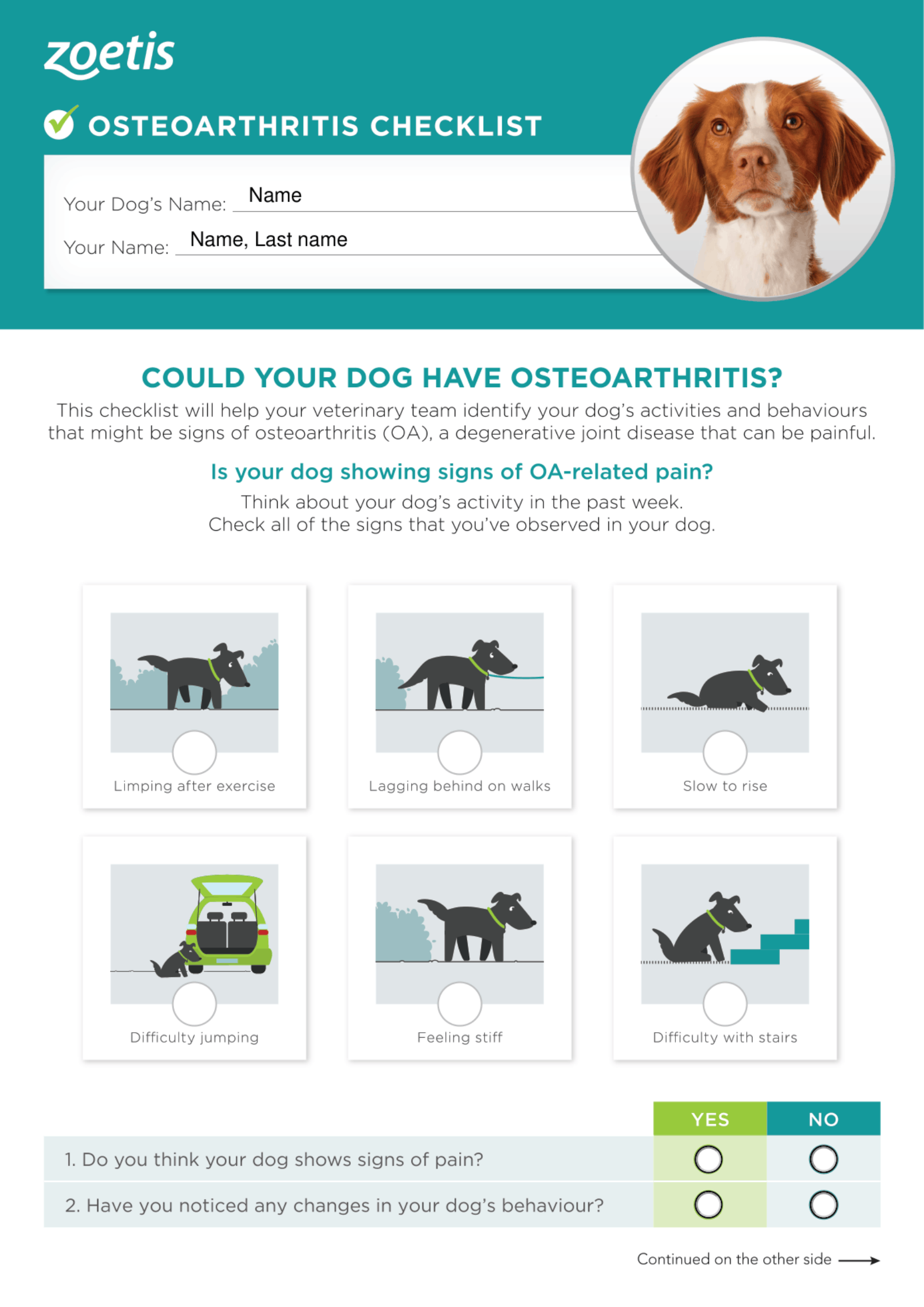
Dogs usually display obvious changes in mobility, including:
- Limping
- Difficulty rising after resting
- Stiffness, especially in the morning
- Slower walks
- Reluctance to climb stairs
- Hesitation to jump into the car
- Reduced interest in playing
- Muscle loss in the hind limbs
- Irritability when touched around painful joints
Many owners notice that symptoms worsen during cold or damp weather.
Osteoarthritis Checklist for Dogs

Signs of Osteoarthritis in Cats
Osteoarthritis (OA) is extremely common in felines.
Over 60% of cats over age six
have radiographic signs of OA. This prevalence increases with age, affecting approximately
90% of cats over the age of 12.
Cats are experts at hiding pain, making arthritis much harder to detect. Instead of limping, they often simply change their daily habits.
Watch for:
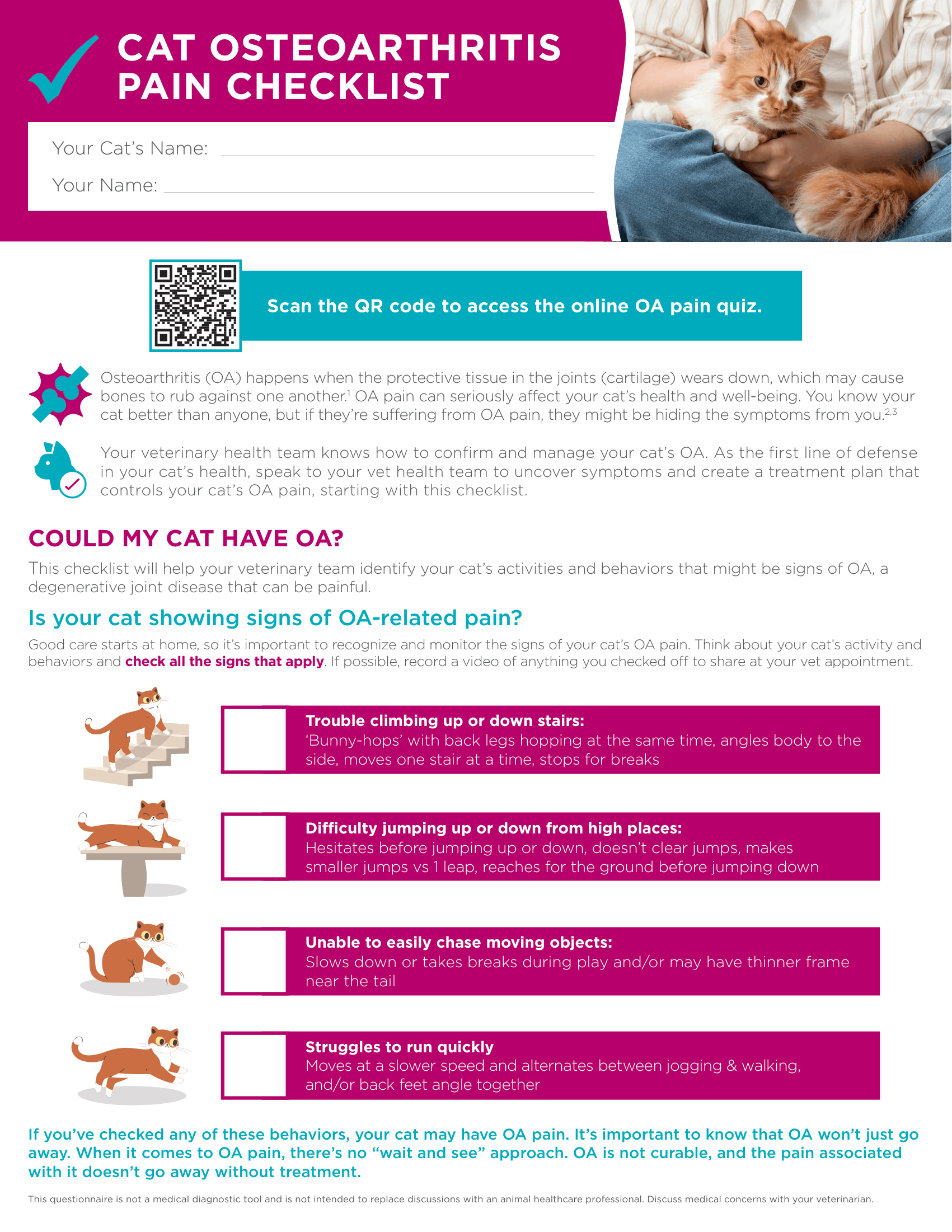
- Jumping less frequently
- Sleeping more
- Difficulty grooming
- Matted fur
- Avoiding stairs
- Missing the litter box because climbing is painful
- Becoming less social
- Irritability when handled
- Decreased activity
Studies suggest that most cats over 12 years of age have evidence of arthritis on X-rays, even if they appear normal.
Cat Osteoarthritis Pain Checklist

How Veterinarians Diagnose Osteoarthritis
Diagnosis begins with a thorough physical examination. Your veterinarian will assess:
- Joint flexibility
- Muscle mass
- Pain during movement
- Joint swelling
- Walking gait
Additional diagnostic tests may include:
- Digital radiographs (X-rays)
- CT or MRI scans (in selected cases)
- Blood work before starting long-term medications
Early diagnosis allows treatment to begin before severe joint damage occurs.
Treatment Options
Managing osteoarthritis typically requires a combination of therapies rather than a single treatment.
Weight Management
Maintaining a healthy body weight is one of the most effective ways to reduce joint stress. Even modest weight loss can significantly improve mobility and decrease pain. Therapeutic joint diets a diet rich in omega-3 fatty acids, specifically eicosapentaenoic acid (EPA) and docosahexaenoic acid (DHA), can help to reduce joint inflammation.
Exercise
Regular, low-impact exercise helps maintain muscle strength and joint flexibility.
Recommended activities include:
- Controlled leash walks
- Swimming
- Underwater treadmill therapy
- Gentle play sessions
Avoid sudden bursts of high-impact activity in arthritic pets.
Pain Medications
Veterinarians may prescribe medications such as:
- Non-steroidal anti-inflammatory drugs (NSAIDs)
- Monoclonal antibody therapies for canine and feline osteoarthritis pain
- Additional pain medications when appropriate
Never give human pain medications to pets without veterinary guidance, as many can be toxic.
Joint Supplements
Some pets benefit from supplements containing:
- Omega-3 fatty acids, from a Marine source
- Green-lipped mussel extract
- Type II Collagen (Flexadin Advance), Egg Shell Membrane (Moxoflex Advanced) or Epiitalis (4 Cyte)
While results vary, these supplements may help support joint health when used alongside other treatments.
Physical Rehabilitation
Veterinary physiotherapy may include:
- Therapeutic exercises
- Laser therapy
- Massage
- Range-of-motion exercises
- Hydrotherapy
These treatments can improve mobility and quality of life.
Making Your Home More Comfortable
Simple home modifications can greatly improve comfort for arthritic pets:
- Provide orthopedic bedding
- Use non-slip rugs on slippery floors
- Install ramps instead of stairs
- Raise food and water bowls for larger dogs
- Use litter boxes with lower sides for cats
- Keep nails trimmed to improve traction
Small changes often make a significant difference.
Can Osteoarthritis Be Prevented?
Although arthritis cannot always be prevented, owners can reduce risk by:
- Maintaining a healthy weight throughout life
- Providing regular exercise
- Preventing obesity
- Treating orthopedic injuries promptly
- Feeding balanced nutrition
- Scheduling regular veterinary examinations, particularly for senior pets
Early intervention is the key to preserving long-term joint health.
When Should You See Your Veterinarian?
Schedule a veterinary appointment if your pet:
- Is slowing down unexpectedly
- Has difficulty standing or climbing stairs
- Limping persists for more than a few days
- Stops jumping onto furniture
- Seems painful when touched
- Has become less active or withdrawn
The earlier arthritis is identified, the more treatment options are available to help preserve mobility.
Final Thoughts
Osteoarthritis is a lifelong condition, but it does not have to prevent dogs and cats from enjoying an excellent quality of life. Modern veterinary medicine offers numerous options to control pain, improve mobility, and slow disease progression. By recognizing the early signs and working closely with your veterinarian, you can help your companion stay active, comfortable, and engaged well into their senior years.
Regular veterinary checkups, maintaining a healthy weight, and providing appropriate exercise remain the cornerstones of successful arthritis management. With a proactive approach, pets living with osteoarthritis can continue to enjoy many happy and comfortable years with their families.